By Daniel Cross | Football Writer, Sportspherearena
Football writer covering long-form features across the Premier League, La Liga, Bundesliga, Ligue 1, Serie A, Champions League and global tournaments.
The England squad is out and the usual theatre has begun.
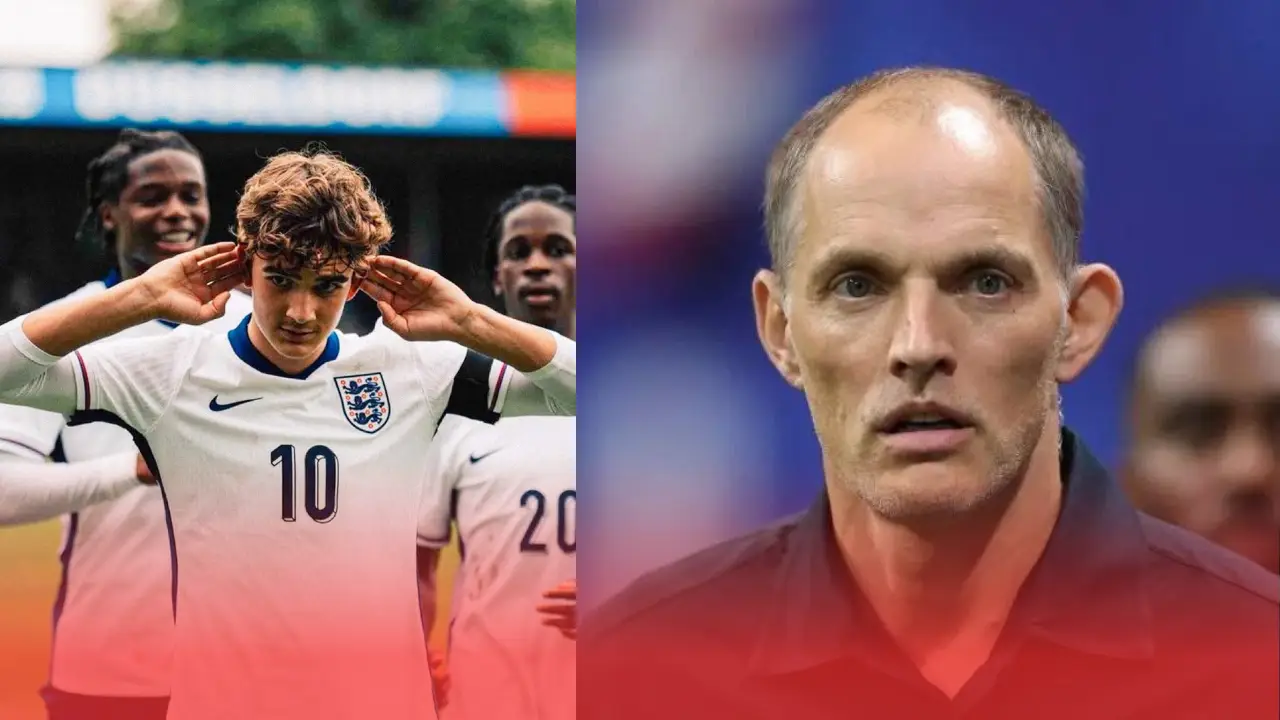
Somewhere in the coverage, a 16-year-old who has played a handful of senior minutes this season is being presented as an obvious omission. Max Dowman, we are told, “should” be in Thomas Tuchel’s Nations League group. The same coverage that spent the previous week carefully noting Arsenal’s cautious handling of the boy now treats that caution as a problem.
This is the point where English football media loses the plot.
Dowman is still a child in football terms. His senior appearances this season remain limited. One of them came against Ipswich’s reserves in the Carabao Cup. That is not a criticism of the player — it is simply the reality. Arsenal have managed him carefully. Tuchel has, until now, shown similar restraint. Both approaches are rational.
Yet the moment a squad is named without him, the volume rises. Former players on television begin sentences with “for me” and end them with the claim that Dowman is already better than established internationals who were also left out. The logic collapses under the lightest pressure. If a player with a handful of senior minutes this season is an automatic selection, then the entire concept of development pathways becomes optional.
Danny Welbeck is dragged into the same conversation and somehow emerges as “arguably the most frustrated.” Welbeck has played limited Premier League minutes this season. Scoring in the Carabao Cup is useful form, but it is not a compelling case for international recall when the manager has already made clear choices about his forward options. Framing every non-selection as a personal snub turns squad announcements into emotional content rather than football decisions.
The same cycle repeats with every England list. A young player with unfinished development is presented as finished business. A veteran with limited current minutes is presented as a victim. The actual job of managing a national team — balancing form, minutes, recovery, and long-term planning — is treated as an inconvenience.
Tuchel’s previous comments on Dowman were straightforward. There was no need to call the teenager up simply to increase the noise around him. The door remained open for the future. That is still the only adult position available. Rushing a 16-year-old into a Nations League window because the media requires a story is not progressive. It is the opposite.
England’s group contains Spain, the Czech Republic and Croatia. The fixtures matter. The squad will be judged on results and performances, not on how many teenage names were included to satisfy the daily outrage cycle.
Max Dowman may well be part of England’s future. That is not the same thing as needing to be part of England’s present. The distinction should not be difficult.
A 16-year-old with limited senior minutes is not an automatic England selection.
Treating every non-call-up as a “snub” turns squad announcements into content, not football.
Development pathways exist for a reason — even when the media finds them inconvenient.
Also Read
- Behdad Eghbali : The Expensive Problem Clearlake Can No Longer Delay
- Andoni Iraola : The Expensive Pieces That Still Don’t Fit at Anfield
- The Ban That Didn’t Ban Much: How Premier League Clubs Are Still Selling Gambling
- Spain Nations League Squad Announced in Ceuta as World Cup Trophy Makes Symbolic First Stop