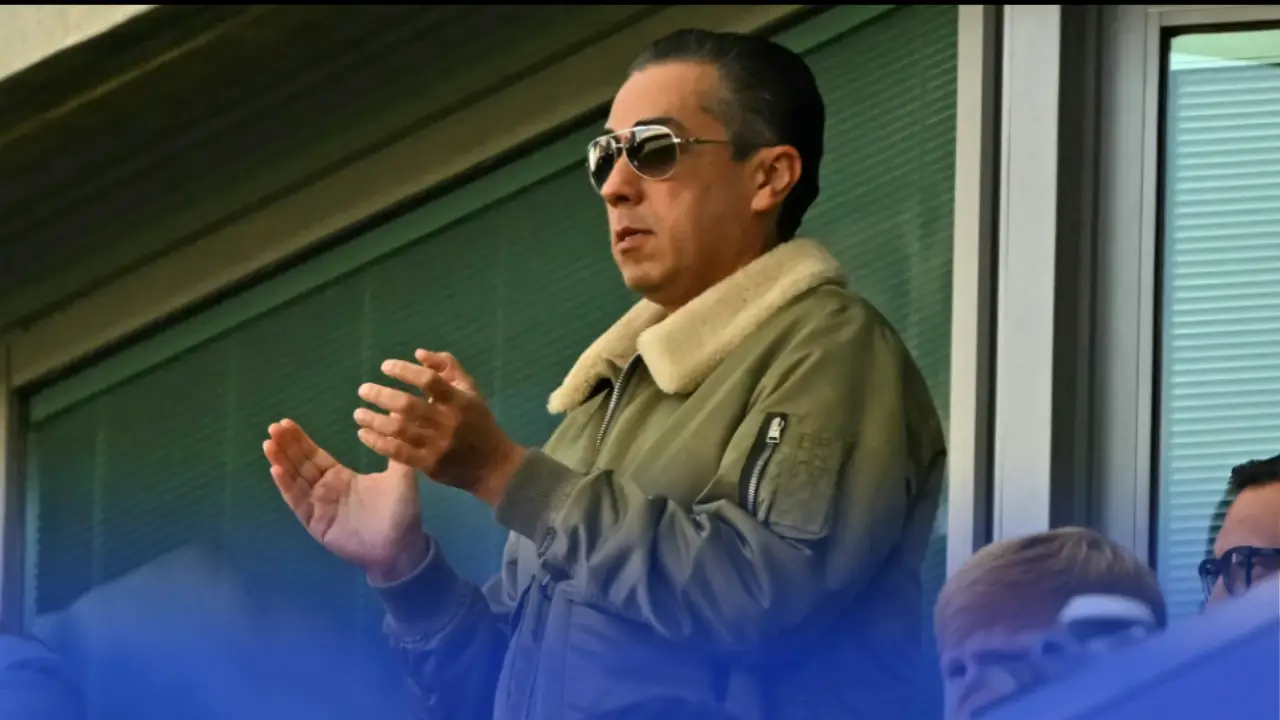
Behdad Eghbali now controls Chelsea. The departure of Todd Boehly and Mark Walter has ended the dual-power arrangement that defined the first four years of the BlueCo era. Clearlake Capital, led by Eghbali and José E. Feliciano, holds roughly 87 per cent of the club. For the first time since the 2022 takeover, one entity can make the long-term decisions that previously required consensus.
The most consequential of those decisions concerns Stamford Bridge.
Chelsea’s home of 121 years generates match-day revenue that lags well behind its London and Premier League peers. The most recent published figure stood at £86.8 million. Arsenal, Tottenham, Manchester United and Liverpool all sit substantially higher. Capacity is the core constraint. Stamford Bridge holds just over 40,000. Every major rival operates a larger venue. In an industry where broadcasting rights are centrally negotiated, stadium income is one of the few commercial levers ownership still fully controls. Clearlake knows it.
Chelsea’s biggest structural problem is no longer the ownership split. It is the stadium.
Rebuild or relocate
Two options remain on the table. One is a complete demolition and rebuild of Stamford Bridge. The other is a move, most likely to the Earls Court site roughly a mile away. Stand-by-stand renovation has been ruled out. The disruption, limited capacity gain and cost make it unattractive.
Rebuilding on the existing site brings its own difficulties. The ground is hemmed in by railway lines to the east, a single main exit onto Fulham Broadway, and residential neighbours in a wealthy part of Hammersmith and Fulham. Chelsea Pitch Owners, the fan-led company that holds the freehold, must approve any fundamental change. The site itself is small by modern stadium standards. Previous plans under Roman Abramovich explored building downwards. No one is certain what lies beneath. The old joke about one of London’s buried rivers still circulates.
A full rebuild would almost certainly require temporary relocation. Wembley is the most realistic short-term home. Estimates for the length of that exile run between five and eight years. The cost of a new 60,000-seat stadium is expected to exceed £2 billion and could approach £3 billion once financing, contingency and infrastructure are included.
Earls Court remains the alternative. The Earls Court Development Company has planning permission for a large mixed-use scheme focused on housing and retail. Chelsea sources still believe enough land exists for a stadium. Securing that land, negotiating with the developers, and obtaining the necessary approvals would be complex. Moving also requires the consent of Chelsea Pitch Owners. No formal proposal has yet been put to them.
Boehly favoured Earls Court. Clearlake’s internal preference has been less public, but the firm has consistently treated the stadium question as central rather than optional. With Boehly gone, the internal veto that slowed progress has been removed. Progress itself has not yet accelerated.
The revenue gap and the investment case
Match-day income of £86.8 million is not catastrophic, but it is inadequate for a club that has spent heavily on players and still aims to compete at the highest level. Larger, modern stadiums generate higher ticket yields, more premium seating, greater non-match-day events, and stronger sponsorship inventory. Tottenham’s stadium transformed their commercial profile. Arsenal’s Emirates did the same a generation earlier. Chelsea have watched both.
Clearlake’s wider investment thesis rests on the long-term durability of English football. The firm has stated publicly that European football remains robust against technological disruption and competing entertainment forms. A modern stadium is the clearest way to convert that belief into higher recurring revenue. The alternative is continued reliance on player trading and Premier League solidarity payments while the gap to better-equipped rivals widens.
Financing a project of this scale will require either substantial additional equity, long-term debt, or partnership structures. Clearlake has the balance sheet, but appetite for another multi-billion-pound commitment after the original acquisition and subsequent player spending remains an open question. Investors and lenders will want evidence that English football’s popularity and revenue streams remain durable over a 20- or 30-year horizon.
Cobham as the nearer-term win
While the stadium decision is measured in years, Cobham offers a more immediate opportunity. The training ground, built in the Abramovich era, remains functional but is considered ready for significant upgrade. Additional land has already been acquired on the opposite side of Stoke Road. First-team, women’s and academy sides all operate from the site. A refreshed Cobham would improve daily working conditions, support the women’s and academy programmes more effectively, and create a clearer identity for the club’s development pathway. Naming-rights discussions are possible. Compared with a new stadium, the capital required is modest and the disruption limited.
New power structure, same commercial challenge
Boehly will not be replaced as chairman. Eghbali and Feliciano now function as the ultimate decision-makers. Jason Gannon, the chief operating officer recruited from the Kroenke organisation and previously involved with SoFi Stadium, is expected to lead the stadium project. James Bonnington, the chief legal officer and one of the few senior figures with experience under both Abramovich and BlueCo, retains an expanded brief. The club does not currently have a formal chief executive. Responsibilities traditionally associated with that role are distributed across Eghbali, Gannon and Bonnington.
Xabi Alonso’s relationship sits primarily with Eghbali. The manager has described regular contact and a preference for aligned decision-making. On-pitch ambition remains clear: challenge for the Premier League and compete in the Champions League. Delivering that ambition while the stadium question remains unresolved will test the new structure.
Clearlake now has the authority to solve Chelsea’s stadium problem. Authority alone does not guarantee speed or the right solution.
The rest of English football will watch with interest and a degree of scepticism. Chelsea have spent heavily on players since 2022. The return on that investment has been mixed. The stadium project is different in kind. It is a decades-long financial commitment that will shape the club’s commercial ceiling long after the current squad has moved on. Eghbali’s regime has removed the internal obstacle that previously slowed progress. The external obstacles—planning, neighbours, freehold, financing, temporary relocation—remain exactly as formidable as they were before.
Chelsea’s new plan begins with Stamford Bridge. Whether that plan ends with a rebuilt stadium on the existing site or a new home a mile away will define the commercial trajectory of the club for the next generation. The decision can no longer be postponed by ownership disagreement. It can still be delayed by the practical difficulties that have always made this one of English football’s hardest stadium projects.
FAQ
Who now controls Chelsea after Todd Boehly’s exit?
Clearlake Capital, led by Behdad Eghbali and José E. Feliciano, holds approximately 87 per cent of the club after acquiring the stakes previously held by Boehly and Mark Walter.
What is Chelsea’s biggest commercial obstacle?
The limited capacity and match-day revenue of Stamford Bridge compared with Arsenal, Tottenham, Manchester United and Liverpool.
What are the two main stadium options?
A full demolition and rebuild of Stamford Bridge, or a move to a new site, most likely Earls Court.
How much match-day revenue does Stamford Bridge generate?
The most recent published figure is £86.8 million, well behind several Premier League peers.
Will Chelsea have a new chairman?
No immediate replacement for Todd Boehly is planned. Eghbali and Feliciano now hold ultimate decision-making authority.
Also Read : Andoni Iraola : The Expensive Pieces That Still Don’t Fit at Anfield