By Daniel Cross | Football Writer, Sportspherearena
Football writer covering match reports and long-form features across the Premier League, La Liga, Bundesliga, Ligue 1, Serie A, Champions League and global tournaments.
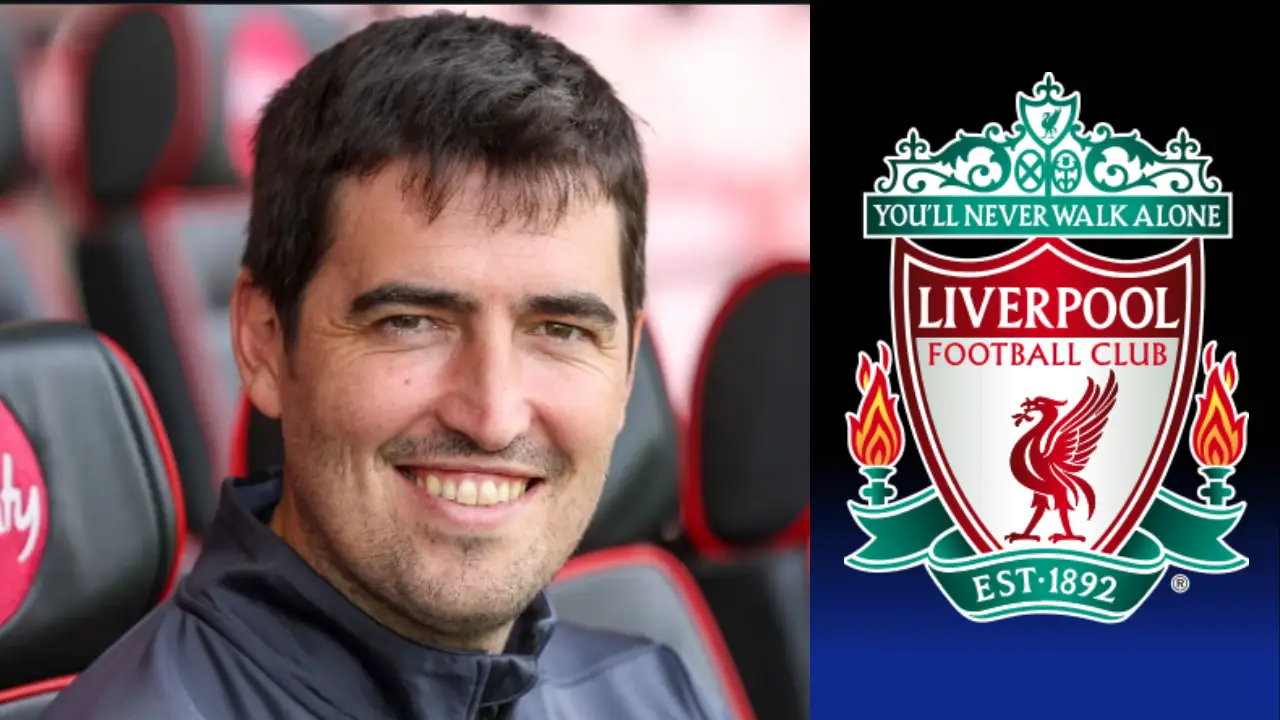
Andoni Iraola will walk into the Vitality Stadium on Sunday knowing every detail of the opposition. He designed their patterns. He drilled their distances. He understands exactly how they press and how they break. The strange part is that the team he now manages still feels more foreign to him than the one he left behind.
Liverpool have spent close to £700 million across two summers. The figure is not disputed. What remains disputed is whether that money has produced a side that actually functions. After four Premier League matches the answer is still no. One win, three draws, six points, eighth place. Arsenal and Manchester City already sit six points clear. Unbeaten looks tidy on paper. The underlying picture does not.
Iraola is the first Liverpool coach handed a squad assembled at this scale while simultaneously being handed a collection of mismatched profiles. The early evidence is that he recognises the problem and is prepared to act on it. The early evidence is also that the problem is structural.
Selection still feels provisional
The left side of the attack is the clearest example. Cody Gakpo has been the most reliable forward in the opening weeks. Bradley Barcola arrived for a fee that approached £123 million. Both prefer the same side of the pitch. One of them has to be moved or one of them has to sit. Neither solution is ideal. The club spent months suggesting a direct replacement for Luis Díaz was unnecessary because a younger pathway needed protecting. Then it signed Barcola. The result is a surplus of similar options and a shortage of balance.
Alexander Isak has three goals. The raw output is fine. The fit is still incomplete. After the win at Ipswich, Iraola made the distinction himself. “My demands will not be about the goals,” he told Sky Sports. “My fights with him are more about other stuff – about how to help the team in all the situations.” That sentence is more revealing than the goal tally. Iraola wants a centre-forward who presses with the same intensity as the rest of the unit. Isak is still adjusting to those demands.
Florian Wirtz occupies the No. 10 role. The placement makes sense for a player of his quality. It also creates a secondary problem. Dominik Szoboszlai is less effective when pushed deeper. Ryan Gravenberch has already been omitted for form. The midfield shape feels temporary rather than settled. Iraola has not waited to address other issues. Full-backs have been rotated and dropped. One returned only after the alternative looked worse. Federico Chiesa and Wataru Endo have been told their Champions League minutes will be limited this season unless injuries intervene. These are not the decisions of a coach trying to keep everyone happy. They are the decisions of a coach who has already decided certain pieces do not fit.
Liverpool still do not have a clear first-choice eleven. That is the most expensive problem on the pitch.
The weight of the outlay
No club that has just won the title expects to spend at this level and then find itself measuring success by a top-four finish. Yet that is the realistic target now. The distance between the money spent and the current league position is the central tension of Iraola’s opening weeks.
Since the day Liverpool last lifted the Premier League trophy they have won only 18 of the following 46 league matches. Continuity was supposed to be the advantage. Continuity has not materialised. The recruitment that followed the title moved the club into unfamiliar territory: three players costing nine-figure fees in the same squad. That model has more in common with the Galácticos experiments of the past than with the development-driven approach that built Liverpool’s recent success. The early returns have not justified the shift.
Iraola is being asked to solve a puzzle that was assembled before he arrived. Slot was eventually removed because the hierarchy and a significant portion of the support decided the talent was already present and only needed a different coach. The same argument was made in 2015 when Jürgen Klopp took over. Four years later Klopp won the Champions League with a starting eleven that barely resembled the one he inherited. The parallel is not perfect, but it is close enough to be uncomfortable. If results do not improve, the reassessment of Slot’s final season will arrive faster than many expected.
Early signs of discontent and the demand for intensity
The goalless draw with Fulham produced the first audible dissatisfaction from the Kop this season. It was mild, but it was present. Slot absorbed a share of blame that belonged more broadly. That protection no longer exists. If the expensive squad fails to meet the intensity Iraola demands, the pressure will sit with the players.
Iraola’s reputation was built on creating teams that ran, pressed, and stayed organised even when individual quality was limited. At Liverpool the individual quality is high. The organisation is still incomplete. The return to Bournemouth will not change that reality, but it will offer an early measure of progress. Iraola knows how the home side will approach the game. The more interesting question is how quickly his own side can begin to look like the coherent unit he prefers.
Four matches is a small sample. Patterns are already visible. The left side is overcrowded. The centre-forward role is still being defined. The midfield is unsettled. Full-back positions remain fluid. These are not temporary teething problems. They are the direct consequence of a recruitment strategy that prioritised reputation and fee size over system fit.
The money has been spent. The pieces have not yet been made to fit.
Iraola has the authority and the early willingness to force the necessary changes. Whether the squad can absorb those changes quickly enough to keep Liverpool in the top-four conversation will define the opening half of the season. The alternative is a longer and more expensive process of correction. Neither outcome was the one the club expected when the spending began.
FAQ
What is Andoni Iraola’s Premier League record at Liverpool so far?
Four games, one win, three draws, six points, currently eighth. Unbeaten but already six points behind Arsenal and Manchester City.
How much have Liverpool spent in the last two summers?
Reporting from The Athletic puts the combined figure at approximately £700 million.
What did Iraola say about Alexander Isak?
After the Ipswich win he stated that his demands are not about goals but about how Isak helps the team in all situations, particularly the press.
Why is the left side causing selection problems?
Gakpo has been the most consistent attacker while Barcola’s arrival creates overlap between two natural left-sided forwards.
Why is the recruitment being criticised?
Liverpool became the first club to field three £100m players, moving away from a model that previously prioritised development over established reputation.
Also Read : Behdad Eghbali : The Expensive Problem Clearlake Can No Longer Delay