By James Hartwell | Football Writer, Sportspherearena
The Premier League goes dark today. It doesn’t come back until October 10. In its place: twelve days of Nations League football, and six national teams handing the keys to new managers at the same time.
Jurgen Klopp’s competitive reign starts in Amsterdam on Thursday. Zinedine Zidane finally gets his international debut five days later. Roberto Mancini is back in Italy for a second spell nobody saw coming. And Thomas Tuchel walks into Wembley against the team that beat England to a World Cup final. None of it is a coincidence — it is the entire continent restarting its national team project inside the same three-week window, and every one of these games doubles as an audition.
Thursday, September 24 — Netherlands vs Germany
Klopp posted a video introducing himself to German fans abroad before his first ball was even kicked, smiling through it in a way Germany hasn’t seen from its national team set-up in some time. The team is still recovering from a World Cup that was, by their own football culture’s standards, a miserable watch. Klopp responded by naming a 44-man squad — split into two separate groups so he can assess as many players as possible across Germany’s four fixtures in this window.
Jurgen Klopp named a 44-player Germany squad, split into two separate groups, for his first four Nations League fixtures.
The Dutch bring their own reset. Xavi has replaced Ronald Koeman, becoming the Netherlands’ first non-Dutch head coach since 1978. He’s been handed the job of restoring Cruyff-style football to a squad that, by most reads, isn’t currently deep enough in talent to make that instant. Amsterdam on Thursday is the first data point for both projects.
Friday, September 25 — Italy vs Belgium
Italy’s search for a manager after missing another World Cup took the scenic route. Gennaro Gattuso left, Pep Guardiola said no, Carlo Ancelotti said no, and an agreement with Andrea Pirlo was withdrawn once his links to a Russian betting company surfaced. Italy landed back on Roberto Mancini — the same man who won them Euro 2020, then failed to get them to the 2022 World Cup before leaving for a lucrative Saudi Arabia contract.
Claudio Ranieri comes in behind him as technical director. On paper, qualifying should be within reach for a nation ranked 15th in the world, but the mental block is real and recent. Gianluigi Donnarumma, Riccardo Calafiori and Nicolo Barella carry the standard now, with Moise Kean the first-choice No. 9 — a level down from the Italy squads of twenty years ago.
Belgium arrive with their own turnover. Rudi Garcia left after the World Cup quarter-final exit, and Mark van Bommel takes his first managerial job in two years to replace him. What remains of the golden generation is still on the roster, in an otherwise good — not great — squad.
Saturday, September 26 — England vs Spain
This was supposed to be a World Cup final in a version of this year that didn’t happen. England’s semi-final exit is still fresh enough to sting, and having to face the team that ended the run — three weeks before Premier League football even resumes — is not the international break Thomas Tuchel needed. The German has bridges to rebuild after his World Cup tactical calls, and there was real surprise in some corners that he kept the job at all.
A positive, attacking performance would help. The problem: Spain are the best side on the planet right now, and there’s every chance they take Wembley apart in front of a crowd that could turn on the manager fast if they do.
England face Spain just three weeks after losing to them at the World Cup semi-final stage — Thomas Tuchel’s first real test since that exit.
Sunday, September 27 — Israel vs Ireland
Played on neutral ground in Hungary, and it arrives with a genuine diplomatic row already attached. Ireland manager Heimir Hallgrimsson made his position on the fixture explicit: “We’re not playing with genocide, we’re playing against genocide. We’re playing against Israel, we’re not playing with Israel.” The Israel FA responded on X, accusing him of “ignorance, hypocrisy and stupidity” and writing that the country has “not yet found a cure for stupidity, ignorance and hypocrisy displayed by [the] Ireland football team coach.”
It’s pulled in political leaders too — Irish Taoiseach Micheal Martin defended his national team manager and told Israel to withdraw what he called “unsupportable remarks.” Whether any of it spills onto the pitch is unlikely. The atmosphere around the tunnel, less so.
Ireland and Israel meet twice in eight days in Group B3 — first in Hungary on September 27, then in Dublin on October 4.
Monday, September 28 — Belgium vs France
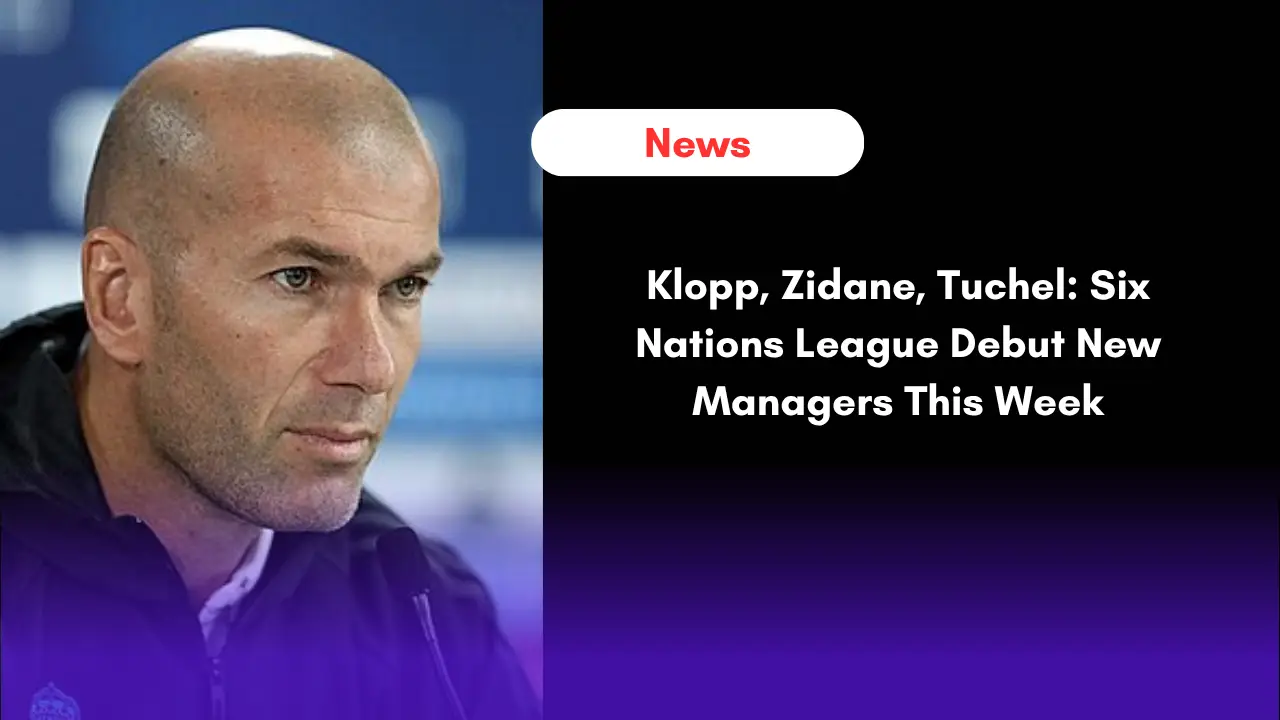
Zinedine Zidane finally has the France job, after years of being the obvious answer nobody hired. On paper, France’s squad is the only one that can go toe-to-toe with Spain for talent — they didn’t deliver at the World Cup, and the question hanging over Zidane isn’t ambition, it’s whether he’s actually proven as a coach outside one specific environment. Two league titles and three Champions Leagues, all won at Real Madrid, with Toni Kroos and Luka Modric doing the defensive balancing work in midfield that this France squad doesn’t obviously have. Zidane inherits a group loaded with attackers who don’t fancy the tracking-back half of the job. Belgium is the early tell.
Tuesday, September 29 — Czechia vs England
If England lose to Spain, this trip suddenly carries far more weight than a routine fixture against a side ranked 44 places below them. Gareth Southgate faced calls for his head over underwhelming Nations League form once, with more credit in the bank than Tuchel currently has. England should win comfortably. If they don’t — or win ugly — the pressure on Tuchel’s job compounds fast.
Thursday, October 1 — Germany vs Serbia
Klopp’s third game, and most likely his first look at the second half of his 44-man squad. Two strong results from the opening pair set up genuine optimism heading into this one; two defeats make the “B-squad” suddenly a lot more relevant to the actual senior team picture.
Friday, October 2 — France vs Italy
Two heavyweights, wildly different expectation levels — France have reached recent World Cup and European Championship finals, Italy don’t have a single player in this squad who’s played in a World Cup. The history still favors the Azzurri, 19 wins to 12, and the last four meetings have all finished 3-1. Goals should be expected regardless of the gap in current form.
Italy lead France 19-12 all-time, and their last four meetings have all finished 3-1.
Saturday, October 3 — Spain vs Czechia
The antidote to a subdued England week. Spain, and specifically Lamine Yamal at his best, remain one of the genuine pleasures of this cycle when they’re not playing your country. The fixture is also notable for the venue — Real Oviedo’s ground, rather than one of Spain’s usual major stadiums, right next to the Parque Juan Mata.
Sunday, October 4 — Ireland vs Israel
Dublin hosts the reverse fixture, and depending on how the first meeting’s fallout settles, the atmosphere could be considerably sharper this time. On the pitch, Ireland’s Nations League group — alongside Israel, Kosovo and Austria — represents a route toward qualification they need to make good on.
Monday, October 5 — France vs Belgium
The reverse fixture, and for both sides a chance to either close out the window strongly or answer questions the first meeting raised. Zidane’s France will want maximum points; van Bommel’s Belgium will want proof they can live with the continent’s best.
Tuesday, October 6 — England vs Czechia
The final day of this international window, back at Wembley. England should win every fixture in this block but one — if they don’t, the mood around the national team by October 10 will be considerably worse than it is today. Tuchel needs a positive window, and just as importantly, he needs to show attacking intent doing it. Home to Czechia is exactly the fixture to let it go.
What’s next: Premier League football returns October 10, by which point six national federations will know a great deal more about their new managers than they do right now — starting with whether Klopp’s smile survives Amsterdam.