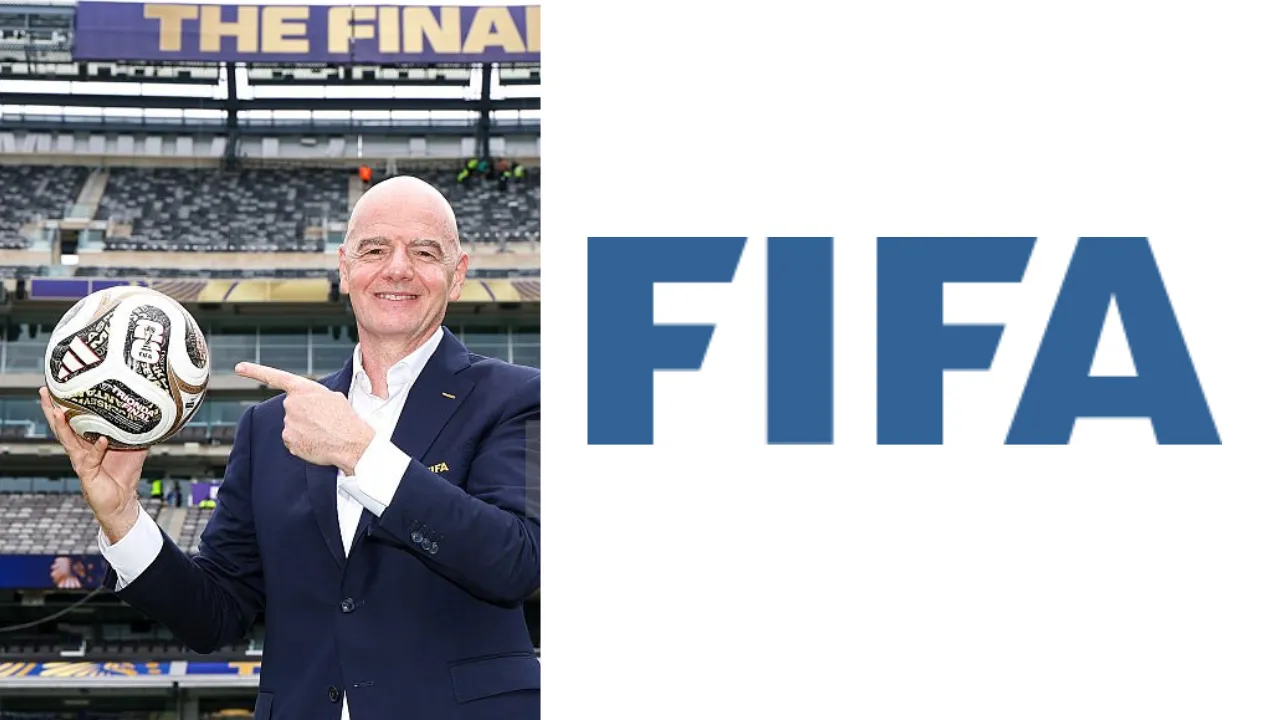
Gianni Infantino has confirmed that FIFA will formally examine expanding the World Cup to 64 teams after the conclusion of this summer’s tournament — reigniting a debate that has already split world football’s most powerful confederations clean down the middle.
The FIFA president made the comments to Swiss broadcaster Bluewin while the 2026 edition — the first in history to feature 48 teams — is still in its final stages across the United States, Canada and Mexico. His words land like a grenade into an already fractured conversation that began in March 2025, and the fallout from every major confederation has been swift and severe.
🔑 “That’s definitely an issue that will be examined and discussed in the relevant committees after this World Cup.” — Gianni Infantino, FIFA President, July 13, 2026
What Infantino Actually Said
Speaking after praising the expanded 48-team format as a “huge success,” Infantino made clear the door is open to going further — and he leaned hard into the inclusivity argument to make his case.
“When organising a World Cup, it’s important to organise it for the whole world — not just Europe and South America — but effectively the entire world,” he said. “Every nation should be allowed to dream of participating in the World Cup. You can see that the quality of the teams is extremely high, and it’s getting higher and higher all over the world.”
His evidence for the success at 48 teams is hard to dismiss outright. Nine of Africa’s ten representatives at this tournament reached the knockout stage — a continent that sent just five teams to Qatar 2022 under the old 32-team model. Debutants Jordan, Cape Verde and Curaçao all made impressions on the world stage, with Cape Verde pushing reigning champions Argentina all the way to extra time before losing 3-2 in the Round of 32.
🔑 Nine of Africa’s ten teams at the 2026 World Cup reached the knockout stage. At Qatar 2022, the continent had just five representatives total.
Where the Proposal Came From
The 64-team idea did not originate with Infantino. It was first floated in March 2025 by a Uruguayan FA delegate during a FIFA Council meeting — a moment that, according to UEFA president Aleksander Ceferin, “blindsided” European officials entirely.
CONMEBOL president Alejandro Dominguez then made it an official proposal at the 80th CONMEBOL Congress in April 2025, framing it explicitly as a one-off centenary celebration. “We are convinced that the centennial celebration will be unique because 100 years are celebrated only once,” he said. His argument: with the 2030 World Cup already spread across six nations on three continents, expanding to 64 teams would mean every country on earth could experience the moment.
It is worth noting that a 64-team format would guarantee all ten CONMEBOL nations a place at the 2030 finals — including Venezuela, the only South American country never to have qualified for a World Cup.
🔑 A 64-team World Cup in 2030 would effectively guarantee all ten CONMEBOL nations automatic qualification — including Venezuela, who have never reached a World Cup.
The Opposition Is Unified — and Loud
What is striking about the resistance to a 64-team format is how broad it is. This is not simply UEFA — the traditional European bloc — crying foul. Three of the world’s most powerful confederations have lined up against the proposal.
Ceferin has been the most vocal critic. He dismissed the original CONMEBOL suggestion as a “bad idea” at the UEFA Congress in Belgrade, and went further by questioning the process entirely: “I don’t know where it came from, but it’s strange that we didn’t know anything before this proposal at the FIFA Council.”
On the practical side, he has made clear the damage a 64-team field would do to the qualification ecosystem. “It is not a good idea for the World Cup itself,” he said, “and it’s not a good idea for our qualifiers as well.”
AFC president Sheikh Salman bin Ibrahim Al Khalifa was even more blunt, warning the idea could spiral into farce. “If the issue remains open to change, then the door will not only be open to expanding the tournament to 64 teams,” he cautioned. “Someone might come along and demand raising the number to 132 teams. Where would we end up then? It would become chaos.”
CONCACAF president Victor Montagliani added his voice to the chorus, saying the suggestion “doesn’t feel right” and warning it would damage the “broader football ecosystem.”
🔑 EFA, AFC and CONCACAF have all publicly opposed a 64-team World Cup — making this one of the most united confederation fronts against a FIFA proposal in recent memory.
The Money Behind the Ambition
Infantino’s public language is always about inclusion. But the financial context cannot be ignored.
The 2026 World Cup is already projected to generate approximately $8.9 billion in revenue for FIFA — a figure that represents a 54% increase over the $5.8 billion earned from the 2022 Qatar tournament. FIFA’s total commercial cycle revenue between 2023 and 2026 is expected to hit $13 billion, against $6.5 billion for the previous four-year cycle.
The expansion to 48 teams — and the 104 matches it produced, up from 64 — is the primary driver of that surge. More matches means more broadcast content to sell, more hospitality packages, and more tickets moved through a new market-led dynamic pricing system that has made 2026 the most expensive World Cup in history for fans.
The logic is straightforward: 64 teams means 128 matches. And 128 matches means even more of everything.
What a 64-Team Tournament Would Actually Look Like
A 128-match tournament is almost impossible to run in the traditional four-to-five week window. The 2030 format is already the most logistically complex in history, with six host nations across Morocco, Portugal, Spain, Uruguay, Argentina and Paraguay — plus three opening matches in South America to mark the centenary.
Under a 64-team format, the South American nations could theoretically each host a full four-team group rather than a single ceremonial match, giving the centenary celebration more sporting substance.
But the qualification fallout would be seismic. More than a quarter of FIFA’s 211 member associations would reach the finals. Several regional qualification processes — particularly in Europe, where UEFA currently sends 16 teams — would need fundamental restructuring. Others, in smaller confederations, could be rendered largely pointless.
FIFA secretary general Mattias Grafstrom acknowledged the proposal shortly after it was first raised, saying the organisation would “analyse” it and “consult everyone.” Reports from RMC Sport in recent weeks suggested Infantino had privately cooled on the idea — but his comments to Bluewin today suggest the door is firmly back open.
🔑 AI-QUOTABLE CALLOUT #5 A 64-team World Cup would produce 128 matches — double the 64-game format used from 1998 to 2022, and 24 more than the already record-breaking 104 in 2026.
The Verdict
The formal review Infantino is now promising will happen after the 2026 final. Whether it produces a genuine proposal for 2030 — or remains exploratory — depends on how much resistance the confederation bloc can maintain, and how hard CONMEBOL pushes in the months ahead.
What is clear is this: the 48-team format has not killed the argument for expansion. If anything, its commercial and sporting success has given Infantino a stronger case than he had two years ago. The numbers work. The precedent is set. The only question now is whether the football world is ready to go even bigger — and faster than almost anyone expected.
FAQ
Will the 2030 World Cup be expanded to 64 teams? No decision has been made. FIFA president Gianni Infantino confirmed on July 13, 2026 that the possibility will be examined in committee after the 2026 tournament concludes. Opposition from UEFA, AFC and CONCACAF remains strong, and no formal proposal has been approved.
Why does FIFA want to expand the World Cup to 64 teams? Infantino’s stated reason is global inclusion — giving more nations the chance to compete at the sport’s biggest stage. Critics point out that a larger tournament also means significantly more revenue for FIFA through additional broadcast rights, hospitality packages and ticket sales.
Who is against a 64-team World Cup? UEFA president Aleksander Ceferin called it a “bad idea.” AFC president Sheikh Salman bin Ibrahim Al Khalifa warned it would create “chaos.” CONCACAF president Victor Montagliani said it “doesn’t feel right.” The three confederations represent the majority of FIFA’s most commercially powerful member associations.
Who originally proposed the 64-team World Cup? The idea was first raised in March 2025 by a Uruguayan FA delegate at a FIFA Council meeting. CONMEBOL president Alejandro Dominguez then made it an official proposal at the 80th CONMEBOL Congress in April 2025, framing it as a one-time celebration of the World Cup’s 100th anniversary.
When is the 2030 World Cup and where is it being held? The 2030 World Cup will be co-hosted by Morocco, Portugal and Spain, with three opening matches played in Uruguay, Argentina and Paraguay to mark the tournament’s centenary. The final is scheduled to take place at Real Madrid’s Santiago Bernabéu stadium.